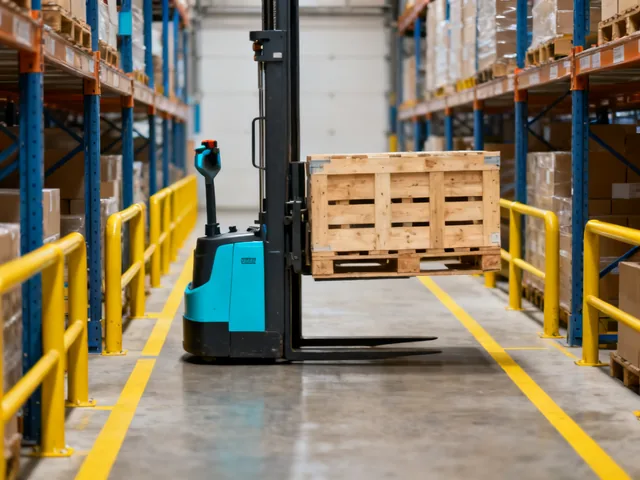
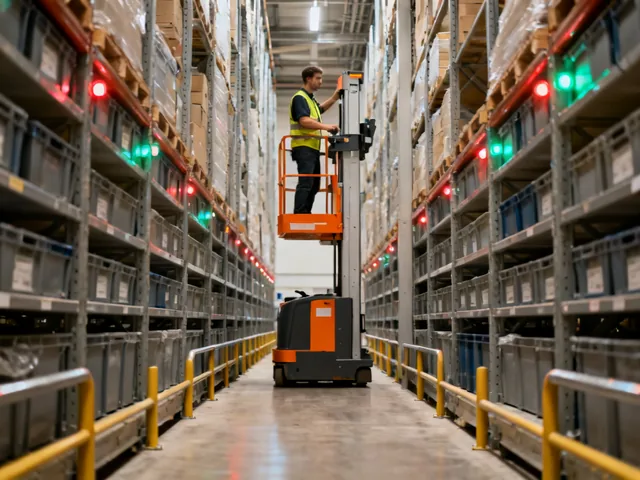
Throughput, residual capacity, aisle geometry and interface ownership are translated into reviewable requirements before a HELI fleet commitment hardens around incomplete duty-cycle assumptions.
These are HELI acceptance rails for project planning. They are not published claims of customer performance or certified corporate statistics.
Grouped parameters keep load envelope, aisle geometry and duty timing visible as reviewable inputs rather than marketing adjectives.
Feature the governing truck class first, then browse supporting stackers and pallet handlers that share the same aisle and duty assumptions.

Counterbalance and reach classes are selected after HELI reviews load center, residual capacity at elevation, aisle clear width, floor joints and the peak window that decides battery or opportunity-charge strategy. Attachments, outdoor dock exposure and simultaneous truck density belong in the same boundary before a model family is shortlisted.
View truck catalogCompare SKU depth, peak factor, temperature and pallet/tote mix before a throughput target is accepted as an acceptance criterion.
| Profile | SKU depth | Peak factor | Temperature | Load mix |
|---|---|---|---|---|
| E-commerce | Broad, uneven velocity | Promotion and cutoff driven | Ambient by zone | Pallets feeding totes |
| Grocery | Fast rotation by store route | Wave and departure driven | Ambient, chilled, frozen | Cases, pallets, roll cages |
| Cold chain | Batch and expiry constrained | Door and dwell constrained | Specified sub-zero range | Pallet dominant |
| Manufacturing | Component and finished goods | Takt and schedule driven | Ambient or process-specific | Pallets, stillages, long loads |
| 3PL / multi-client | Client-segregated velocity | Overlapping SLAs | Multi-zone | Mixed pallet and case flow |
HELI evaluates industrial truck applications against load unit, SKU or order profile, peak rate, interfaces and site constraints. Send the operating window you can defend in review—not a slogan throughput number.
Submit operating data