Corporate systems
ISO 9001 / ISO 45001 style management systems—if held—apply to named legal entities and scopes. Request issuer, locations and validity dates.
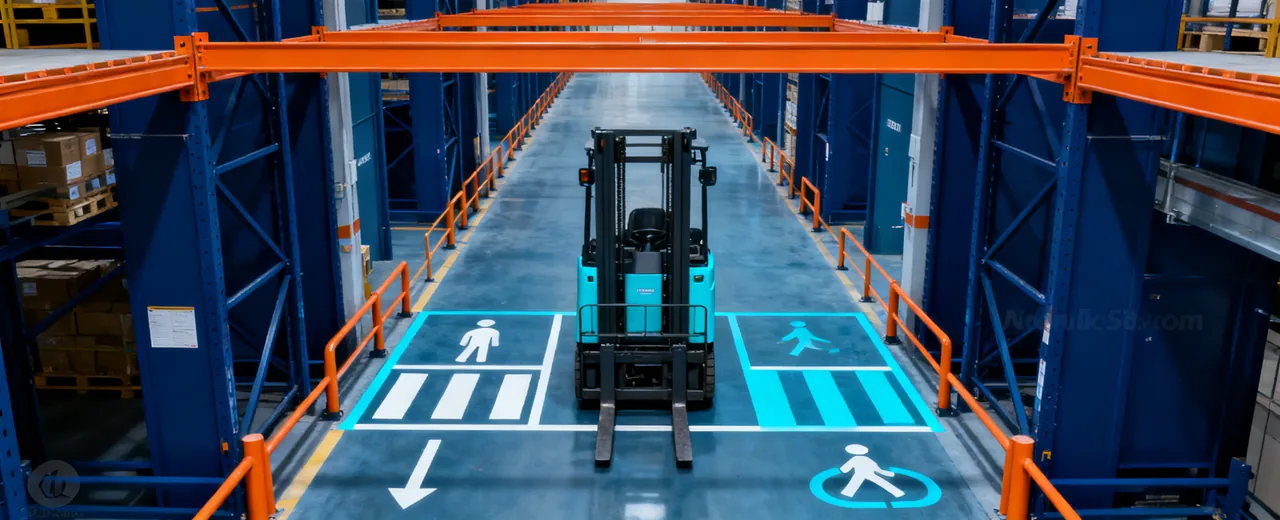
Map machine safety, rack-aisle inspections, functional safety interfaces and document ownership for industrial trucks without converting standards lists into unexplained certificate logos.
ISO 9001 / ISO 45001 style management systems—if held—apply to named legal entities and scopes. Request issuer, locations and validity dates.
ISO 12100 risk assessment and reduction principles inform design reviews. Mention is not a product certificate claim for a specific model.
ISO 3691 family topics and, for North America workplaces, OSHA 1910.178 powered industrial truck rules may inform stability, visibility, operator authorization and traffic discipline. Applicability depends on market and configuration; citation is not a product certificate claim.
When HELI trucks interact with guidance, fleet management or cell controls, ISO 13849-1 style references may inform interfaces—ownership must still be named.
Hazards, protective measures and residual risk conclusions for the governing truck and traffic concept under review.
Clearance at elevation, upright protection, floor condition and any interaction between truck envelope and storage structure.
Scanner fields, e-stops, zone ownership, fleet traffic rules and who may authorize restart after a protective stop.
Representative tasks, warning verification, isolation authority, fallback states and retest triggers after configuration changes.
HELI Safety & Compliance work treats machine safety, aisle inspections, functional safety boundaries and validation documents as a single evidence chain. We do not present generated planning ranges as certified facts, and we do not display certificate logos without a named issuer, scope and current document for the exact entity and configuration under review.
Goals for a typical project review include: (1) a written residual risk basis for the governing truck and traffic envelope; (2) a traffic plan that names pedestrian and equipment interaction rules; (3) commissioning tasks that exercise both normal and recoverable abnormal states; (4) maintenance ownership that can quarantine a defective truck or aisle without improvised workarounds. Progress is measured by closed document items, not by slogan completion.
Where guided trucks or fleet management are adjacent, scanner fields, traffic rules, charging and equipment-to-control exceptions become part of the same hierarchy. Where only conventional counterbalance fleets operate, local workplace rules and manufacturer instructions still require authorization and inspection discipline. In both cases, this page exists to make evidence boundaries explicit before capital decisions harden around incomplete assumptions.
Provide load data, aisle geometry, pedestrian density, known standards of interest and any automation interfaces. The review returns a residual-risk register that distinguishes document-ready controls from open site checks.
Request a safety evidence review